It all began with an animal sanctuary

At the end of 2017, the first farmer approached Sarah and Georg Heiligtag, founders of the animal sanctuary Hof Narr, seeking support in transforming his agricultural business into a peaceful and future-oriented form of farming. What started back then has since led to many successful transitions and has shaped the concept of TransFARMation since 2019. So it all began with Hof Narr and its exemplary work, which not only demonstrated in theory that farming without animal exploitation is possible, but also showed in practice how it can be achieved.

What

Farms that currently produce eggs, dairy, or meat are supported in transitioning toward a sustainable agriculture that no longer relies on the use of animals.

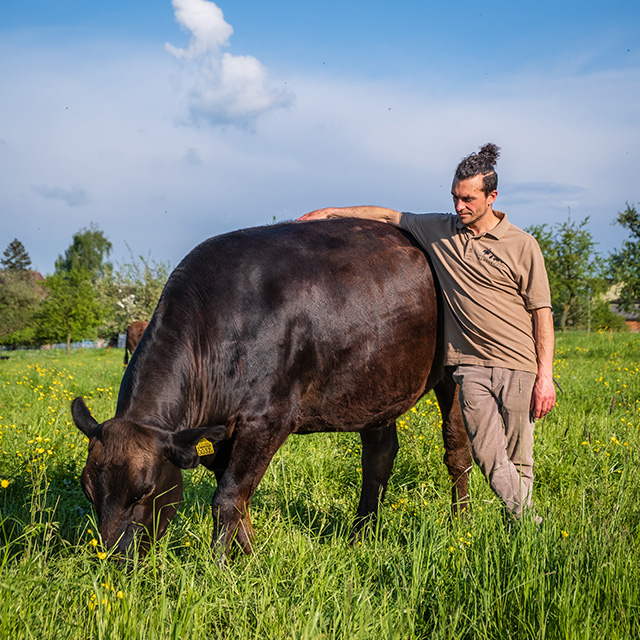
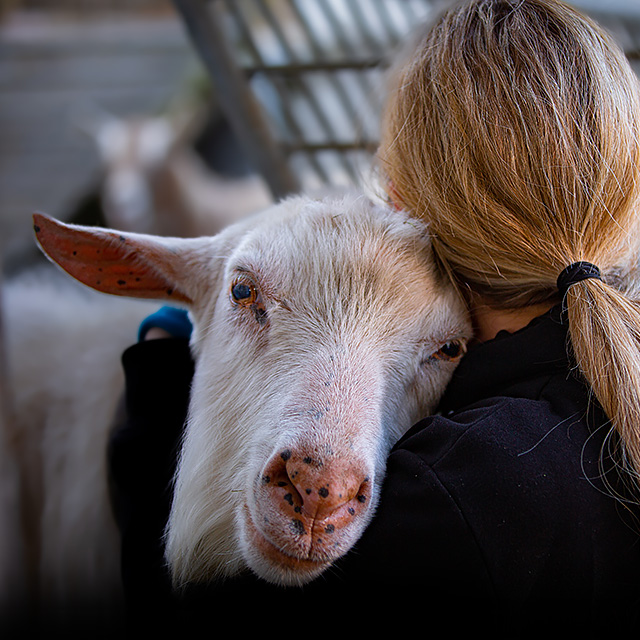
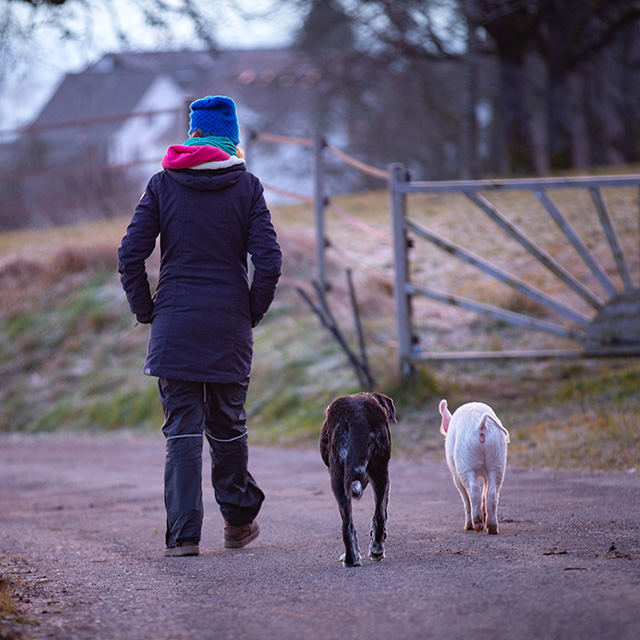
Depending on the individual situation, the animals can remain on the farm as part of an animal sanctuary concept, helping to raise awareness for animal welfare and protection issues while helping to build a supportive community.

Who

This offer is aimed in particular at farmers who are interested in exploring new paths within agriculture that do not involve the use or killing of animals.

If you know farmers who are having doubts—who “wouldn’t actually send animals to their deaths if they didn’t have to”—please feel free to tell them about the opportunity of TransFARMation. Today, no one needs to exploit animals in order to produce nutritious food while securing a stable income.

We have gained experience from more than 250 farm transitions and we know: every farm is unique – and there is a solution for everyone. We help find the path that suits them best and establish a solid (financial) foundation.

If you run a farm yourself, don’t hesitate to contact us. We are happy to provide advice without obligation. Our goal is to help you do work that truly fulfills you, build a financially resilient farm, and (re)discover your sense of purpose in your profession.

Why

There are many different reasons for making this transition. The ones we encounter most often are a sense of connection with fellow living beings and the desire to produce in a more sustainable way.

Many farmers still feel a deep bond with their animals as fascinating and unique personalities – a connection that most of us felt naturally as children but were often taught to suppress as we grew older.

Ending the use of animals in agriculture is not only a liberation of the heart; it also opens up exciting opportunities for a more ecologically valuable form of farming and new sources of income generated directly on the farm.

When crops are grown for human consumption instead of animal feed, the ecological potential is immense. Using land and resources to produce feed for animals is inherently inefficient. When imported feed and fertilizers are involved, animal agriculture also contributes to ecosystem degradation beyond national borders, as well as to the over-fertilization of soils and waterways, which threatens biodiversity.

For example, one litre of oat milk can require up to ten times less land and generate up to four times fewer greenhouse gas emissions than one litre of cow’s milk.

We see TransFARMation as part of a broader agricultural transition that is being demanded by an increasing number of people. Replacing meat, dairy, and eggs with high-quality plant-based products made from ingredients grown on the farm is a development with the potential to transform agriculture and make it far more efficient than it is today.

Humanity will always depend on agriculture to produce its food. If this can be done in a way that is non-violent, fair, and climate-friendly, everyone ultimately benefits.

TransFARMation

Interessiert an einem Beratungs­gespräch?

Selbstverständlich sind unsere Beratungsgespräche unverbindlich und an deine Situation angepasst. Interessiert dich, wie es auf deinem Hof nach einer TransFARMation aussehen könnte? Hast du immer wieder Zweifel an deiner Arbeit und fragst dich, ob es nicht auch anders gehen könnte auf deinem Hof? Drückt der Schuh ganz woanders? Kontaktiere uns.